
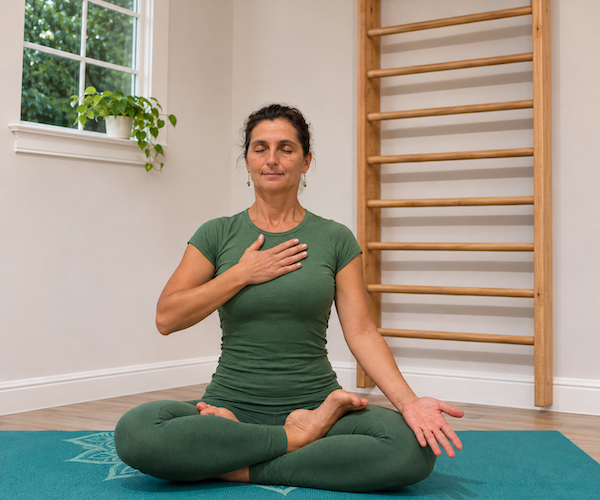

An exercise in self-compassion, body awareness, and acceptance
Duration: 10–15 minutes | For educators, psychologists, caregivers, and helping professionals
Purpose
We often thank others for what they do, but how often do we thank our own bodies?
Our feet carry us. Our hands help us work, create, and care for others. Our backs support us through difficult days. Yet we frequently notice our bodies only when something hurts or feels exhausted.
This exercise invites us to replace criticism with appreciation and offer kindness to the parts of ourselves that may need additional attention.
Guided facilitation script
1. Arriving in the present moment (2 minutes)
Find a comfortable position, sitting or lying down.
If you feel comfortable, gently close your eyes. Otherwise, simply soften your gaze.
Allow your breathing to follow its natural rhythm.
For the next few minutes, you do not need to accomplish anything.
You are simply here.
With yourself.
With your body.
With everything that is present in this moment.
2. Thanking your body (4 minutes)
Bring your attention to your feet and legs.
Think about everything they do for you.
They help you stand, walk, move, and maintain your balance.
Silently say:
Dear legs, thank you for carrying me.
Thank you for supporting me throughout my life.
Now move your attention to your hands.
Think about all the things your hands have done today.
Perhaps they prepared food, wrote a message, held someone’s hand, or offered comfort.
Dear hands, thank you for everything you do.
Move your attention to your back.
Your back helps support you throughout your days.
Dear back, thank you for supporting me, even when life feels heavy.
Continue through your shoulders, neck, face, and heart.
You may thank each part of your body in your own words.
3. Finding a place that needs love (3 minutes)
Now gently ask yourself:
Is there a place in my body that needs a little more love today?
Perhaps your shoulders feel tired.
Perhaps your knees are uncomfortable.
Perhaps your back is asking for rest.
Or perhaps there is a part of your body that you have criticized or neglected.
You do not need to change anything.
Simply notice.
Imagine a soft, warm patch made of love.
It may look like a small piece of golden fabric, a gentle light, or a comforting blanket.
Imagine placing this patch over the part of your body that needs additional care.
Allow it to rest there.
You may silently say:
I see you.
I appreciate you.
You deserve kindness, even when you are tired or hurting.
Stay with this image for a few moments.
If imagining this feels uncomfortable, you can simply notice the support of the chair or floor beneath you.
4. Extending love to your whole self (2 minutes)
Imagine that the warmth of this patch gradually expands.
It reaches other parts of your body.
Your hands.
Your legs.
Your shoulders.
Your heart.
Perhaps your whole body feels surrounded by a soft, comforting blanket.
Silently repeat:
I am grateful for my body.
I do not have to be perfect to deserve care.
I can appreciate my body as it is today.
I allow myself to receive the same kindness I offer to others.
5. Returning and reflecting (2–4 minutes)
Gently notice the room around you.
Feel the surface supporting your body.
Move your fingers and toes if comfortable.
When you are ready, open your eyes.
Take a moment to ask yourself:
What did my body tell me today, and how can I respond with kindness?
Perhaps your body needs movement.
Perhaps it needs sleep, nourishment, or a moment of quiet.
Perhaps it simply needs you to stop criticizing it.
Choose one small action of self-care you can offer yourself today.
Reflection for participants
Following the exercise, invite participants to share one thought, if they wish:
“If my body could speak to me today, what would it ask me to understand?”
We spend so much time offering support, kindness, and compassion to others. Today, allow yourself to receive some of that compassion, too. Your body has accompanied you through every moment of your life. Perhaps today is a good day to say, “Thank you. I see you. I care about you.”