
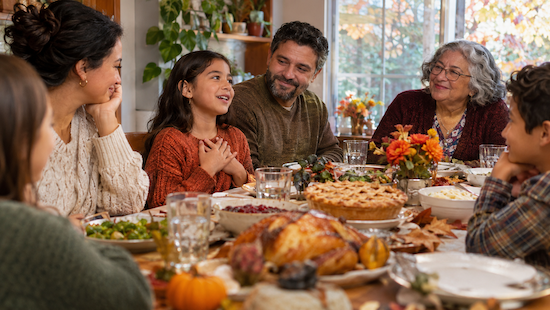

Helping children and adults notice, express, and experience gratitude together
Thanksgiving is a wonderful opportunity to teach children that gratitude is not only about saying “thank you.” It is about noticing the good in our lives, appreciating the people around us, and finding joy in even the smallest things.
Here are three simple, meaningful exercises that parents can practice with their children, relatives, and friends around the Thanksgiving table.
1. A Moment of Gratitude Before the Meal
When: Before everyone begins eating · 3–5 minutes
Purpose: To help children and adults pause, reflect, and recognize something positive in their lives.
How to practice:
Before beginning the meal, invite everyone to take a moment to look around the table and think about what they are grateful for today.
Go around the table, allowing each person to complete the sentence:
“Today, I am grateful for…”
Encourage children to share whatever comes to mind, even if it seems small.
Examples:
- “I am grateful that we are all together today.”
- “I am grateful that I got to play with my cousins.”
- “I am grateful for our home.”
- “I am grateful that Grandma is feeling better.”
- “I am grateful for my dog, who always makes me smile.”
For parents: Avoid correcting or judging children’s answers. Gratitude does not need to be profound. What matters is learning to notice and appreciate what we have.
2. Looking Into Each Other’s Eyes: Gratitude for You
When: During the meal · 5 minutes
Purpose: To strengthen emotional connections and help family members feel seen, loved, and appreciated.
How to practice:
Invite everyone to turn toward the person sitting next to them.
Encourage them to look into each other’s eyes, if comfortable, and share one thing they appreciate about that person.
Start with:
“I am grateful for you because…”
Examples:
- “I am grateful for you because you always make me laugh.”
- “I am grateful for you because you help me when I need it.”
- “I am grateful that you are my brother, even when we disagree.”
- “I am grateful for your hugs.”
- “I am grateful that you are here with us today.”
Continue around the table until everyone has had an opportunity to give and receive gratitude.
For parents: Encourage children to be specific and sincere. Sometimes hearing why someone appreciates us can mean more than receiving a gift.
If someone feels shy, they can smile, hold hands, or simply say, “I’m happy you’re here.” Eye contact and speaking aloud should be invitations, not requirements.
3. The Joy of Little Things: My Favorite Food
When: While enjoying Thanksgiving dinner or dessert · 3–5 minutes
Purpose: To teach children to appreciate simple pleasures that we often take for granted.
How to practice:
Invite everyone to look at the food on the table and choose something they especially enjoy.
Ask:
“What food are you grateful exists, and why?”
Encourage everyone to finish the sentence:
“I am grateful that ______ exists because…”
Examples:
- “I am grateful that apple pie exists because it is delicious and reminds me of Thanksgiving.”
- “I am grateful for mashed potatoes because they are warm and comforting.”
- “I am grateful for chocolate because it makes me happy.”
- “I am grateful for pumpkin pie because my grandmother makes it with love.”
To deepen the experience, invite children to take a small bite, notice its taste and texture, and enjoy it without rushing.
You can also ask: “Who helped make it possible for us to enjoy this food?”
Children might think about farmers, cooks, grocery workers, or the family member who prepared the meal.
For parents: This playful exercise helps children discover that gratitude is not limited to big accomplishments, expensive gifts, or extraordinary experiences. Sometimes happiness comes from noticing something as simple as a delicious slice of apple pie.
A Thanksgiving Message for Parents
We often encourage children to be grateful for what they receive. But gratitude is something we can practice together, not something we need to demand from them.
These three exercises invite families to recognize gratitude in three different ways:
Gratitude for what we have. Gratitude for one another. Gratitude for life’s simple pleasures.
There is no need for perfect answers or forced positivity. Some family members may be experiencing sadness, grief, or difficult circumstances. They can participate in whatever way feels comfortable, including simply listening.
And perhaps the most important lesson is that gratitude does not have to end when Thanksgiving dinner is over.
We can practice it every day, one small moment at a time.
Wishing you and your family a meaningful Thanksgiving filled with connection, kindness, and gratitude.