

The “Giraffe and Jackal” Practice: Teaching Children Nonviolent Communication and Empathy
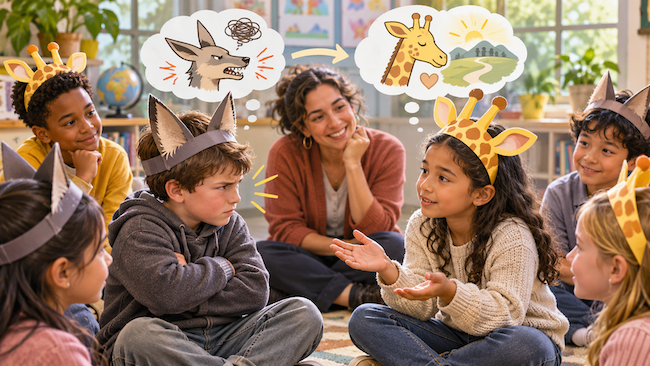
When children encounter aggression or harsh words from their peers, they may instinctively react defensively or respond with similar behavior. To help children develop empathy and respond to conflict more constructively, Alissa Fodor, APRN, PMHNP-BC, introduced the “Giraffe and Jackal” exercise during one of VELA Well-being’s professional intervision sessions with Ukrainian educators. This engaging, visual practice offers educators a practical way to help children look beyond aggressive behavior, recognize underlying emotions and needs, and develop more compassionate communication skills.
This method can be easily adapted for group work in schools, extracurricular activities, or youth workshops.
Core Concept: Two Modes of Reaction
The practice is rooted in Nonviolent Communication (NVC) and uses two vivid metaphorical images:
– The Jackal represents a reactive stance, seeing everything negatively and acting out of aggression.
– The Giraffe—with its long neck—looks at situations from a higher perspective, noticing what isn’t immediately visible up close.
To make the activity interactive, participants use headband props with jackal and giraffe ears (which can also be easily crafted from paper together with the kids).
How to Conduct the Practice: Step-by-Step
1. Scenario Modeling: The facilitator or participants introduce a common real-life scenario where someone speaks aggressively.
2. Recognizing the “Jackal”: Children first put on the “jackal ears” to identify the moment of aggression and observe how negative emotion manifests in behavior.
3. Switching to the “Giraffe”: Next, participants put on the “giraffe ears.” Their task is to look beyond the aggressive facade and answer the question: “Why did this person speak that way?” Children brainstorm root causes—perhaps the person is feeling hurt, had a bad day, or simply doesn’t know how to express their needs constructively.
Why This Practice Works
– Building Empathy Over Resentment: Children begin to realize that behind aggressive behavior often lies an unfulfilled need or internal pain.
– Creating a Psychological Shield: Practicing this regularly (even for 5–10 minutes) helps children stop taking external aggression personally.
– Developing Inner Insight: Participants learn not to absorb destructive anger into themselves, but instead respond with understanding and composure.
This brief interactive exercise helps de-escalate group tension and equips children with tools for healthy communication during conflict.