

ADOLESCENT DEVELOPMENT | FAMILY RELATIONSHIPS | DIGITAL MEDIA
How can parents guide children’s choices of role models and online influences without undermining their independence, identity development, or trust?
Professional Response
During the VELA discussion, participants emphasized that adolescence is a period of identity exploration. Young people naturally experiment with different perspectives, behaviors, and role models as they begin developing an identity separate from their parents.
Attempting to control every influence may create more conflict than cooperation.
Several approaches were discussed:
1. Model the values you want your children to develop.
Children learn not only from what parents say but also from what they do.
If parents value kindness, respect, generosity, or responsibility, demonstrating those values consistently in everyday life is more meaningful than simply instructing children to follow them.
2. Recognize the importance of autonomy.
Adolescents need opportunities to explore their identities and make choices. Disagreement with parents does not necessarily indicate unhealthy development.
Parents can provide direction without expecting their children to become identical to them.
3. Establish boundaries without excessive control.
One participant compared parental guidance to handrails along a staircase.
Handrails provide support and protection while allowing a person to move independently.
Similarly, parents can establish clear family expectations while allowing children room to develop their own interests.
4. Replace judgment with curiosity.
Rather than immediately criticizing an influencer, parents can ask:
- What do you like about this person?
- What qualities do you admire?
- Is there anything you disagree with?
- How do you think this person’s behavior influences others?
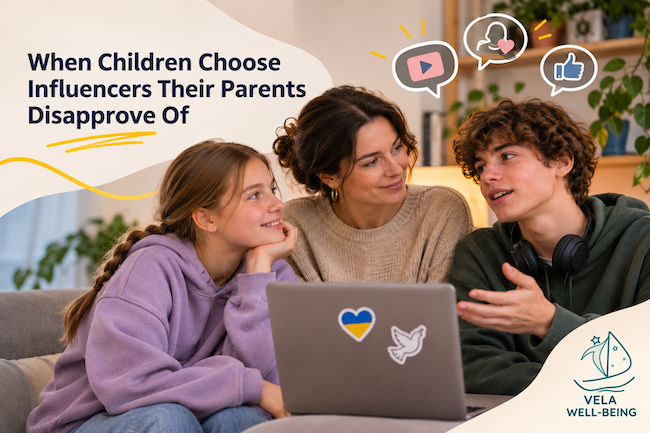
Watching a video together and discussing different perspectives can create opportunities for meaningful communication.
5. Address parental anxiety.
Parents who experience significant distress about their children’s choices may benefit from speaking with a counselor or psychologist.
Recognizing the difference between genuine safety concerns and differences in personal preferences can improve communication.
Additional Professional Suggestions
Develop digital media literacy. Teach children to recognize advertising, manipulation, unrealistic expectations, harmful stereotypes, and the difference between online performance and authentic relationships.
Explore values collaboratively. Invite family members to identify five values that are important to them. Compare their lists and discuss how those values appear in real-life decisions.
Encourage multiple role models. Introduce children to inspiring people in their communities, professions, sports, arts, and volunteering opportunities rather than focusing only on restricting unwanted influences.
Distinguish preferences from safety concerns. A parent’s dislike of a creator is different from content that promotes violence, exploitation, dangerous challenges, or other harmful behavior. Safety concerns may require firmer boundaries.
Key Takeaway
Parents cannot choose every influence their children encounter, but they can create a family environment where values are demonstrated, questions are welcomed, and independent thinking is encouraged.